
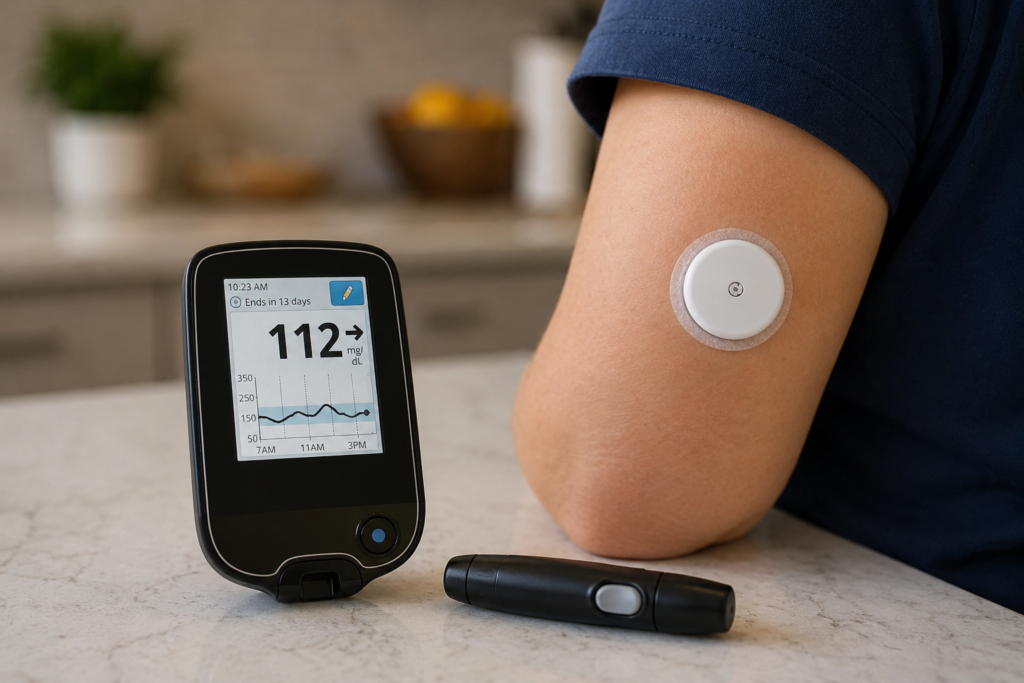
When I was diagnosed, the technology was one of the more overwhelming parts with meters, sensors, CGMs and the apps. So here’s a plain-language overview of the best glucose monitors and CGMs available in 2026, what the differences are, and why this space is genuinely exciting for people with type 2 right now.
This guide is updated as the technology changes so check back for the latest.
Two main ways to check your blood sugar
1. Fingerstick meters — the classic: a small drop of blood on a test strip gives you a single reading. Inexpensive, reliable, but it’s one moment in time and requires a prick each check.
2. Continuous glucose monitors (CGMs) — a small sensor worn on your arm that reads your glucose automatically, all day, sending data to your phone. No fingersticks for each reading, and you see trends, not just snapshots. This is where most of the innovation is happening.
The big 2026 story: CGMs you can buy without a prescription
Here’s what makes this year different, and genuinely good news for people with type 2. The FDA approved the first over-the-counter continuous glucose monitor, meaning you no longer always need a prescription to get one.
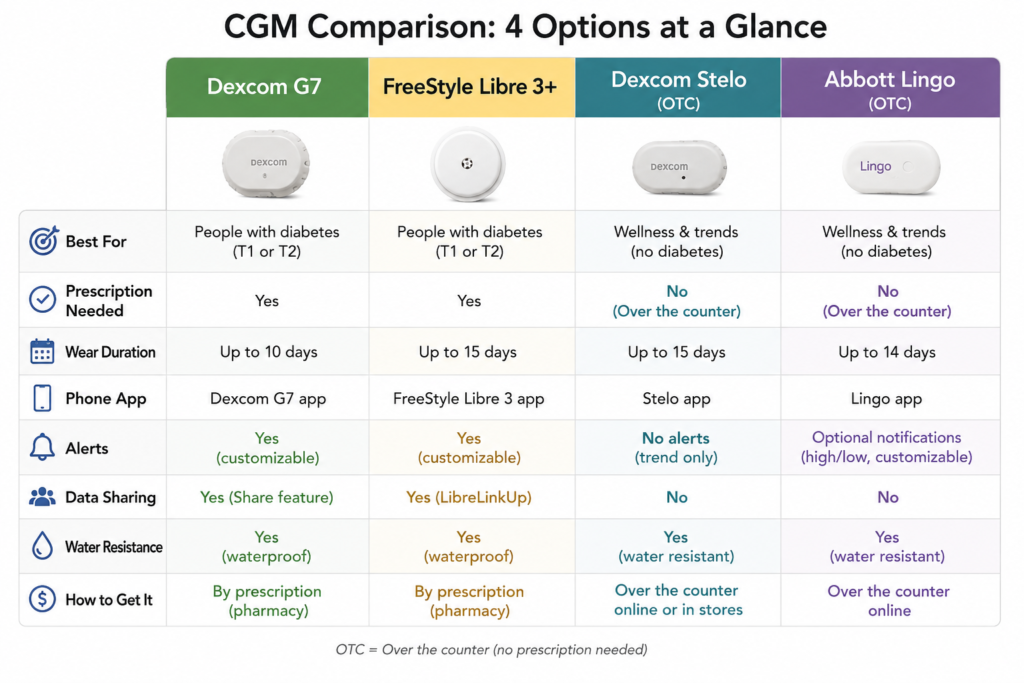
Right now in the US there are essentially four CGMs available: two that require a prescription (Dexcom G7 and FreeStyle Libre 3+) and two you can order over the counter without one (Dexcom Stelo and Abbott Lingo).
The main options, briefly
- Dexcom G7 (prescription) — widely regarded as a top choice for accuracy and ease of use, with a 30-minute warm-up and phone/watch integration.
- FreeStyle Libre 3+ (prescription) — one of the smallest, thinnest sensors available, sending readings every minute, often at a lower cash price.
- Dexcom Stelo (over-the-counter) — the first major over-the-counter CGM, aimed at metabolic health and prediabetes; a starter option that doesn’t need a prescription.
- Abbott Lingo (over-the-counter) — a wellness-focused OTC sensor with in-app meal feedback; note it’s designed for people without diabetes and doesn’t have low-glucose alerts, so it’s more of a curiosity/metabolic-health tool than a diabetes-management device.
One important caution worth flagging: if you need alarms for high or low blood sugar, you need a prescription CGM (the Dexcom G7 or FreeStyle Libre 3+) because the OTC wellness sensors generally don’t alert you.
Do you need a CGM for type 2?
Not everyone does, and a simple meter is completely valid. But many people with type 2 find a CGM genuinely eye-opening — seeing how specific foods and walks affect your blood sugar in real time is one of the fastest ways to learn your own body. Personally, I use a CGM and it changed how I understand my numbers.
Talk to your doctor about whether one makes sense for you, and whether your insurance covers it (many plans now do, with a prescription).
Some FAQ’s
Question 1: Can you buy a CGM without a prescription? Yes, options like the Dexcom Stelo and Abbott Lingo are available over-the-counter online, though they are tailored more toward general wellness tracking rather than severe hypoglycemic alerts.
Question 2: How long does a glucose sensor last? Most modern continuous sensors last between 10 to 14 days before needing to be replaced.
Question 3: Will insurance cover my glucose monitor? Many insurance plans cover traditional fingerstick meters and prescription CGMs for type 2 diabetes if prescribed by a doctor, while OTC options are typically paid out-of-pocket.
What’s coming next
The technology keeps moving fast and manufacturers are even developing sensors that monitor both glucose and ketones, and OTC access is expanding. That’s why this page gets updated. Bookmark it and check back for the best glucose monitors to date.
This is general information, not medical or purchasing advice. Device availability, pricing, and features change — confirm current details with the manufacturer and your doctor. Some links may be affiliate links; see our [Disclaimer].