
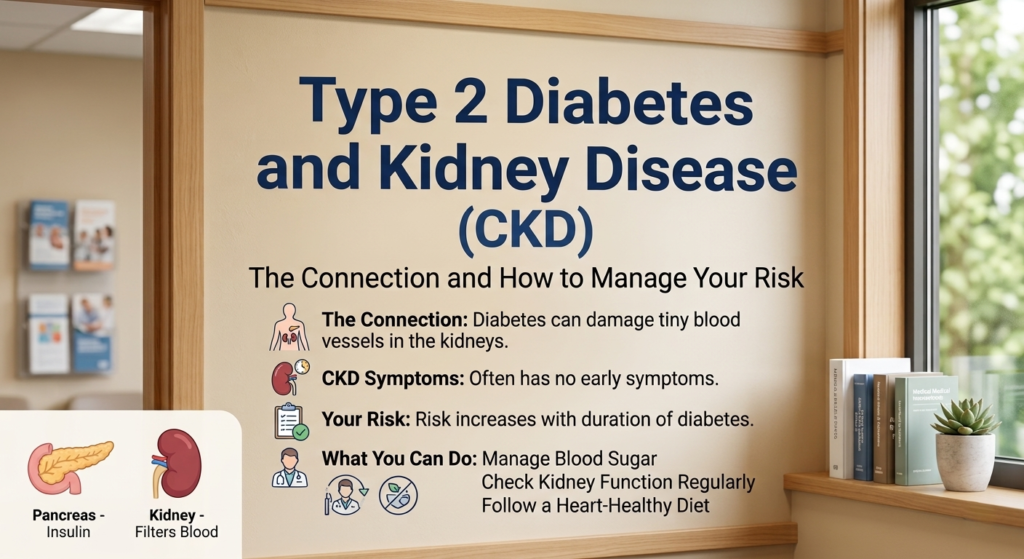
When you’re newly diagnosed, doctors sometimes mention your kidneys, and it can be alarming. So let’s talk about it calmly and clearly because understanding the diabetes-kidney connection is exactly how you protect yourself.
Important first: this article explains what these terms mean and what to ask your care team. It is not a treatment plan. Kidney health is genuinely medical territory, so use this to get informed and have better conversations with your doctor and not to self-manage.
Why diabetes affects the kidneys
Your kidneys are filters where millions of tiny blood vessels that clean waste from your blood. Over time, high blood sugar can damage those small vessels, making the filters work less well. That damage is called diabetic kidney disease or diabetic nephropathy, and it’s a form of chronic kidney disease (CKD).
Here’s why it matters so much: diabetes is one of the leading causes of kidney disease. The good news is that damage develops slowly, which means there’s real opportunity to catch and slow it early.
The scary part and the empowering part
CKD is often called a “silent” condition because early on, there are usually no symptoms. You can have early kidney changes and feel completely fine. That sounds frightening, but here’s the flip side: simple tests catch it early, long before you’d feel anything. Which means testing, not symptoms, is your protection.
The two tests to know
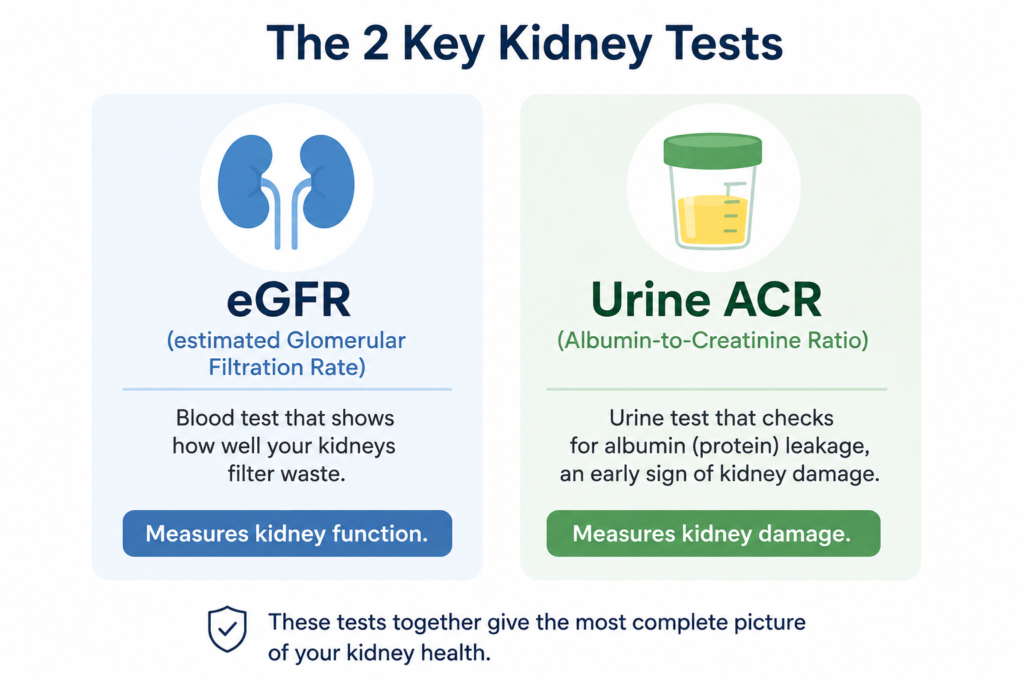
Ask your doctor about these they’re how kidney health gets monitored:
- eGFR (estimated glomerular filtration rate) — a blood test estimating how well your kidneys filter. Higher is better.
- Urine albumin (ACR) — checks for protein leaking into your urine, an early sign of kidney stress.
You don’t need to master the numbers. You just need to know these tests exist and make sure they’re being done regularly.
Warning signs in later stages
Early CKD is silent, but as it progresses, signs can include:
- Swelling in the feet, ankles, or legs
- Fatigue or trouble concentrating
- Changes in urination
- Nausea or loss of appetite
- Trouble sleeping
If you notice these, that’s a reason to talk to your doctor not to diagnose yourself, but to get evaluated.
How diabetes and kidney health connect to blood pressure
There’s an important trio here: diabetes, kidney disease, and high blood pressure are deeply linked. High blood pressure both damages kidneys and results from kidney problems, and managing blood sugar and blood pressure together is central to protecting your kidneys. (We cover the blood pressure link in its own [Type 2 + High Blood Pressure article →].)
Questions to ask your doctor
Bring these to your next appointment:
- “What are my latest eGFR and urine albumin results?”
- “How often should my kidney function be checked?”
- “Are any of my medications kidney-protective, or hard on my kidneys?”
- “Should I see a nephrologist (kidney specialist)?”
- “What blood pressure and A1C targets are right for protecting my kidneys?”
The bottom line about diabetes and kidney disease
The connection between diabetes and your kidneys sounds scary, but knowledge flips it into control. Kidney damage is slow, detectable early, and can often be slowed significantly by managing blood sugar and blood pressure and getting the right tests on schedule. The people who do worst are the ones who don’t know to ask.
This article is educational and not medical advice. Chronic kidney disease requires professional diagnosis and management so always work with your doctor or a nephrologist. If you’re experiencing a medical emergency, call 911.