
I’m a Black man who got diagnosed with type 2 diabetes with no family history I knew of and no warning. So this topic isn’t abstract for me — it’s personal. And the numbers tell a story that every one of us should understand, because knowledge here is genuinely protective.
Let me be clear about the spirit of this article. This isn’t about fear or blame it’s about arming you and our community with the truth, so we can catch things earlier, ask better questions, and get the care we deserve.
The reality of the numbers
The disparities are real and well documented. Black Americans are diagnosed with diabetes at substantially higher rates than white Americans and the complications hit harder too. Rates of diabetes related kidney disease, vision loss, and amputations are all significantly higher in our community.
Now none of these outcomes are inevitable, they’re heavily influenced by how early diabetes is caught and how well it’s managed. Both of which you have real power over once you understand what you’re up against.
Why the gap exists
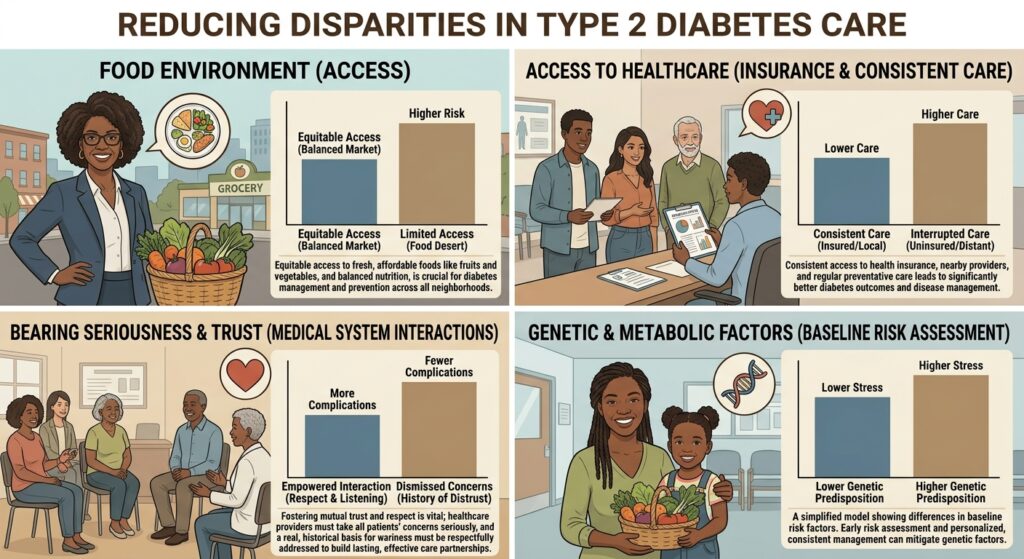
The reasons are complex, and importantly, most of them are not about personal willpower. They include:
- Access to healthcare — differences in insurance, nearby providers, and consistent care
- Being taken seriously — studies show Black patients’ symptoms are sometimes dismissed or under treated (something I want you to be ready to push back on)
- Food environment — access to fresh, affordable food varies widely by neighborhood
- Genetic and metabolic factors — some populations face higher baseline risk
- Trust — a real and understandable history that makes some in our community wary of the medical system
Naming these isn’t about excuses it’s about understanding what to watch for so you can navigate around it.
What this means for you, personally
Here’s how to turn this information into protection:
1. Get screened earlier and more often. Given the higher risk, don’t wait. Know your A1C and fasting glucose numbers, and if you’re not being tested regularly, ask.
2. Look at your own numbers — always. This is the lesson from my own story which was a number of mine wasn’t flagged, and I caught it myself. Get your lab results in writing and learn what they mean. (See our [Understanding Your Numbers guide →].)
3. Advocate for yourself in the doctor’s office. If your concerns are brushed off, push. Ask direct questions and bring a written list. If you have a friend or family member in medicine, ask them to help you read your results. You have every right to be taken seriously.
4. Watch for the complications that hit our community hardest. Make sure your doctor is monitoring your kidneys, eyes, and blood pressure not just your blood sugar. (See our articles on [kidney disease →] and [high blood pressure →].)
5. Rework the food you love, don’t abandon it. Soul food and the meals we grew up on are part of who we are. You don’t have to give them up and small changes (how things are cooked, portion sizes, what’s on the plate alongside) go a long way.
We look out for each other
Here’s what I believe: information saves lives, and it spreads through community. If this helped you, share it with someone you love. Talk about your numbers with your family. Break the silence around a diagnosis that too many of us face alone.
I built this site partly because I couldn’t find enough voices that looked like mine talking honestly about this. We’re higher-risk, yes but we’re also capable, informed, and absolutely able to live full lives with this condition. The first step is knowing the truth about diabetes in the black community and you’ve got it now.
This article is educational and not medical advice. Always work with your own care team on your health. If you’re experiencing a medical emergency, call 911.