

Before my diagnosis, I had a number that should have been a wake-up call. My A1C came back around 6.0 right on the edge of prediabetes. I didn’t fully understand what that meant at the time, and my life didn’t change much because of it.
I’m telling you this so you don’t do what I did: look at a borderline number and shrug.
Here’s the good news that makes prediabetes different from where I ended up: prediabetes is often reversible. It’s the one stage where the warning light is on but the engine hasn’t failed yet. If you catch it here, you have real power to change the outcome.
What is prediabetes, exactly?
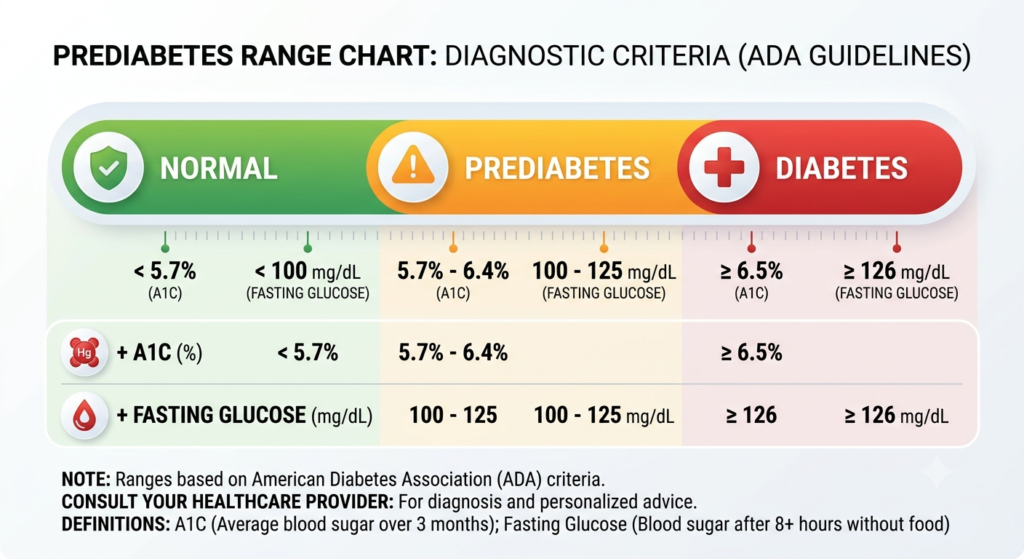
Prediabetes means your blood sugar is higher than normal but not yet high enough to be called type 2 diabetes. Think of it as the yellow light between green and red.
In numbers:
- A1C of 5.7% to 6.4% is the prediabetes range (5.7 and below is normal; 6.5+ is diabetes)
- Fasting glucose of 100 to 125 mg/dL is prediabetes (99 and below is normal; 126+ is diabetes)
The warning signs people miss
Here’s the hard part: prediabetes often has no obvious symptoms. That’s exactly why it gets ignored including by me. But there are quiet signals worth paying attention to:
- Increased thirst and more frequent urination
- Feeling unusually tired
- Blurred vision
- Slow-healing cuts
- Darkened skin patches (often on the neck or armpits — called acanthosis nigricans)
- Unexplained weight changes
If any of these sound familiar, that’s a reason to get your numbers checked and not to panic. Many people have prediabetes with no symptoms at all, which is why testing matters more than waiting to “feel” something.
Who’s at higher risk?
Some risk factors you can’t change, some you can:
- Being over 45
- A family history of type 2 diabetes
- Being overweight, especially carrying weight around the middle
- Being physically inactive
- Being African American, Hispanic, Native American, or Asian American — these groups face higher risk (more on that in our [Black & Diabetic section →])
- History of gestational diabetes
I want to be honest here: I was active, ate reasonably well, and still ended up diabetic. Risk factors are about odds, not guarantees. Which is exactly why knowing your numbers beats assuming you’re fine.
The part that gives you power: you can often turn it around
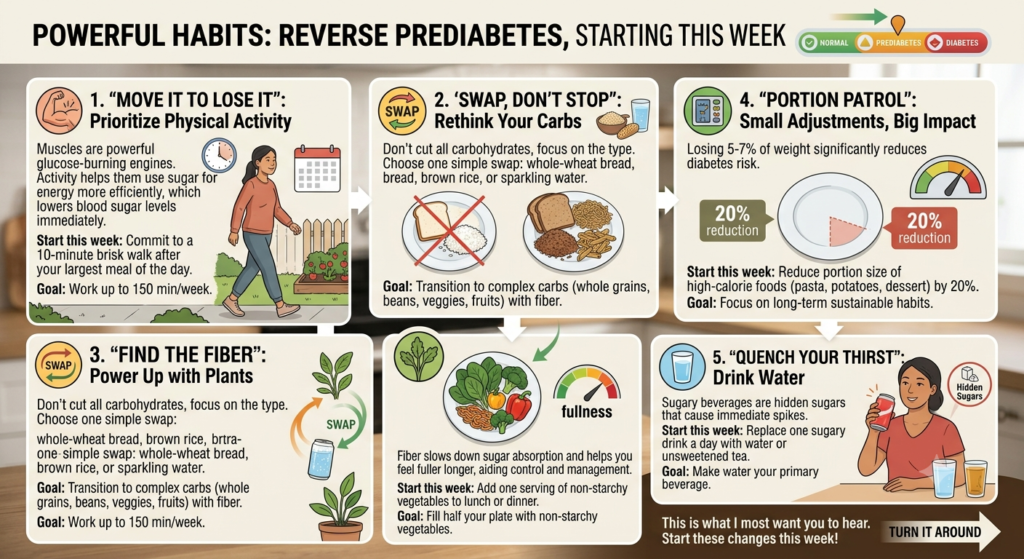
This is what I most want you to hear. Unlike a type 2 diagnosis, prediabetes frequently responds to changes you can start this week:
- Move more– Even a daily walk makes a measurable difference in blood sugar.
- Lose a modest amount of weight– Studies show losing even 5–7% of body weight can dramatically cut the risk of progressing to type 2.
- Cut the liquid sugar– Soda, juice, sweetened coffee as these spike blood sugar fast.
- Add fiber and protein, watch refined carbs– Small, sustainable swaps beat crash diets.
- Get retested– Don’t guess and track whether your numbers are moving
Don’t wait like I almost did
If you’ve been told you’re prediabetic or your numbers are creeping toward that range treat it as the gift it actually is: a warning before the damage, with time to act. I didn’t fully grasp mine, and I can’t go back. But you’re reading this, which means you still can.
Get your numbers, learn what they mean, make a few changes and get retested. That’s the whole playbook, and it works.
Nothing here is medical advice. These ranges are general references — talk to your own doctor about your numbers and your plan. If you’re experiencing a medical emergency, call 911.